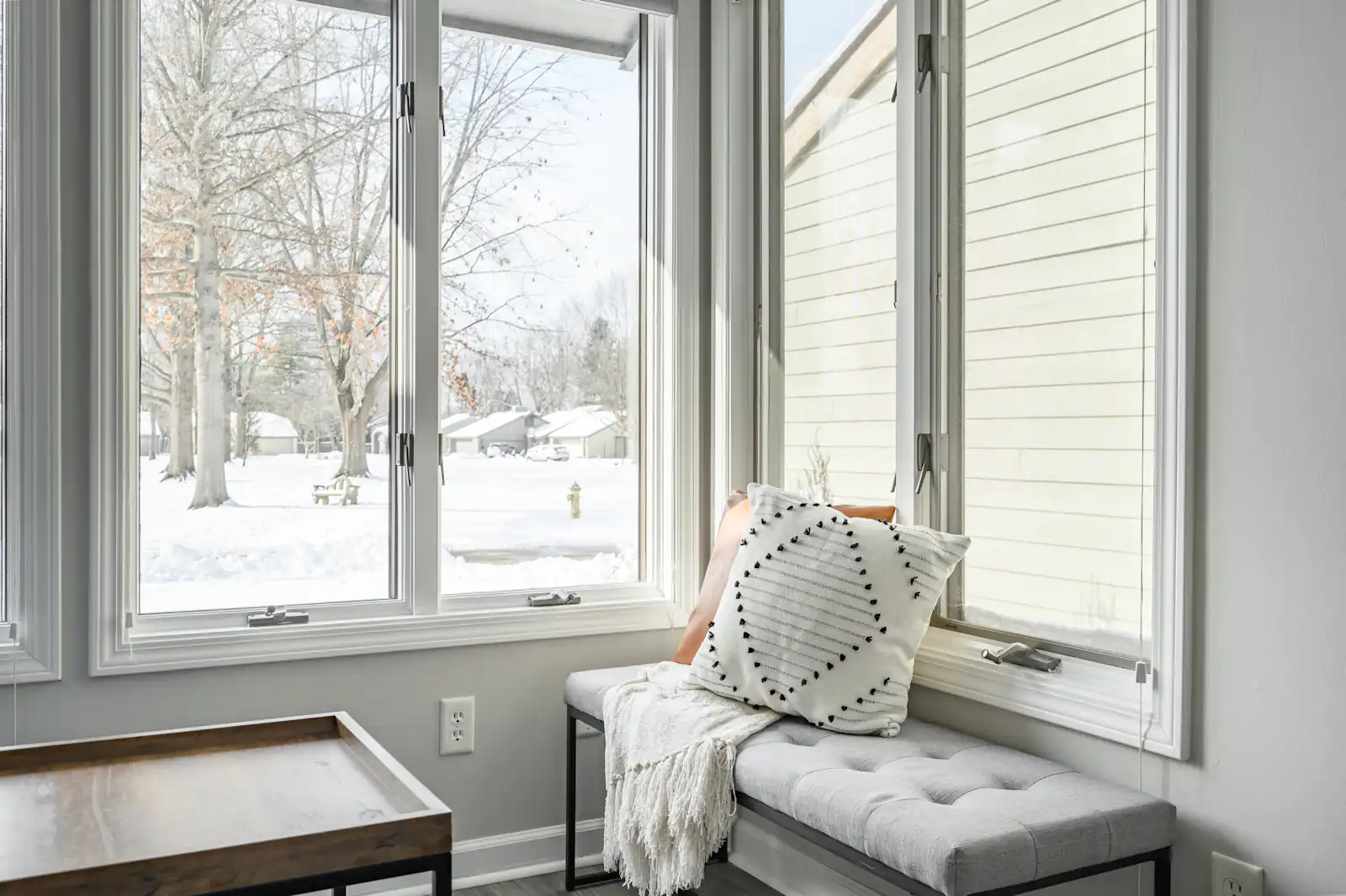
Tilt and turn windows are common across Germany and much of Europe, and they are becoming a familiar sight in Newcastle too, especially in flats, townhouses and loft rooms. A single handle lets the sash tilt in at the top for ventilation or swing fully inwards like a door. That makes them very practical where reaching the outside of the glass is awkward or unsafe.
They do work differently from the outward-opening windows most of us grew up with, so it is worth understanding how they behave before you choose them. This page covers how tilt and turn windows work, where they make the most sense and what living with them is really like.
How does a tilt and turn window actually work?
The handle has three main positions. Pointing down, the window is closed and locked. Turned to the side, the sash is released to swing inwards on hinges at one side, like a door. Turned upwards, the sash is held at the side and tips in at the top by a few centimetres, held by a stay.
All of this is controlled by a gear mechanism hidden in the frame, which runs around the whole sash. When you close the window, locking points engage around the perimeter rather than just at the handle. A safety device usually stops you selecting both modes at once, which could otherwise cause the sash to hang from a single hinge.
Turn-first or tilt-first?
Some versions are "tilt-first", where the first quarter turn of the handle tilts the window and the turn function can be locked out. This is a good choice for children's bedrooms or rooms over a drop, as the full opening can only be reached with a key.
Tilt and turn windows in flats and high-rise buildings
This is where tilt and turn windows really earn their place. On an upper-floor flat in the city centre or a converted building on Quayside, cleaning outward-opening windows usually means hiring a specialist. With an inward-opening sash, you can clean both sides of every pane from inside the room.
If you own a leasehold flat, check your lease before changing windows. Many leases say the windows belong to the freeholder or that you need consent for alterations, and some blocks have a set style and colour. Planning rules for flats also differ from those for houses, so it is worth checking with the council too. We are happy to provide drawings and specifications to support any application.
Large tilt and turn sashes can be heavy. For tall windows in apartments and loft conversions, the hardware has to be rated for the weight of the glass, especially with triple glazing. We specify the hinges and stays to suit each window.
Escape routes and safety on upper floors
Because the whole sash swings clear when turned, a tilt and turn window can give a wide, unobstructed opening. That makes it a strong candidate where Building Regulations call for an escape window, such as in a first-floor bedroom or a loft conversion. The size of the clear opening and its height above the floor both matter, so we check every escape window against the requirements at survey.
The same wide opening needs managing where children are about. Lockable handles, tilt-first hardware and restrictors all help, and you can still use tilt mode for fresh air while the turn function is locked.
Living with inward-opening windows
The main adjustment is that the sash swings into the room. You need to keep the space in front of the window clear, so deep sills crowded with plants, ornaments or a desk pushed against the wall can get in the way.
Blinds and curtains
Blinds fixed to the frame outside the sash will block it. Options that work well include blinds fitted within the glazing bead on the sash itself, roller blinds mounted well above the frame, and curtains on a pole that clears the sash. If you are redecorating at the same time, think about this before you buy new blinds.
Radiators below the window
If a radiator sits close under the window, check that the sash clears it when tilted and turned. We look at this during the survey and can adjust the layout, for example by adding a fixed pane below the opener.
Tilt mode, fresh air and North East weather
Tilt mode is a gentle way to air a room. The gap is at the top, so warm, moist air escapes while rain is mostly kept out and draughts at head height are reduced. On a blustery day by the coast at North Shields, that is far more comfortable than a casement flapping open in the wind.
It is worth remembering that a tilted window is not locked. It should be closed when you go out or go to bed on the ground floor. For background ventilation while the window is shut, trickle vents can be built into the frame, and current Building Regulations guidance often expects them on replacement windows.
Looking after the hardware
Tilt and turn mechanisms are robust, but they have more moving parts than a simple casement. Once a year, put a little light oil on the locking points around the sash and the hinges, and wipe the gaskets with a damp cloth. If the sash starts to catch on the frame as it closes, it usually just needs adjusting at the hinges, which is a quick job. Our window repairs team can help if one ever needs attention.
Tilt and turn or casement: which is better for you?
Tilt and turn windows usually cost a little more than casement windows, because the hardware is more complex. They are worth it on upper floors, in flats and anywhere outside access is difficult. For ground-floor rooms with plenty of furniture near the windows, casements are often simpler to live with.
Tilt and turn is available in uPVC and in aluminium, so you can match it to the rest of your home. Many customers use both styles in the same house, choosing tilt and turn for bedrooms and lofts and casements downstairs. If you would like us to look at which windows would suit each style, you can book a free survey through the quote form.