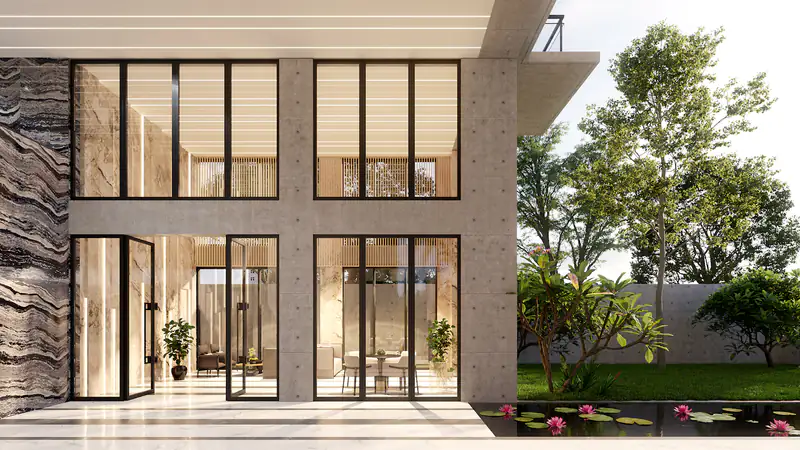
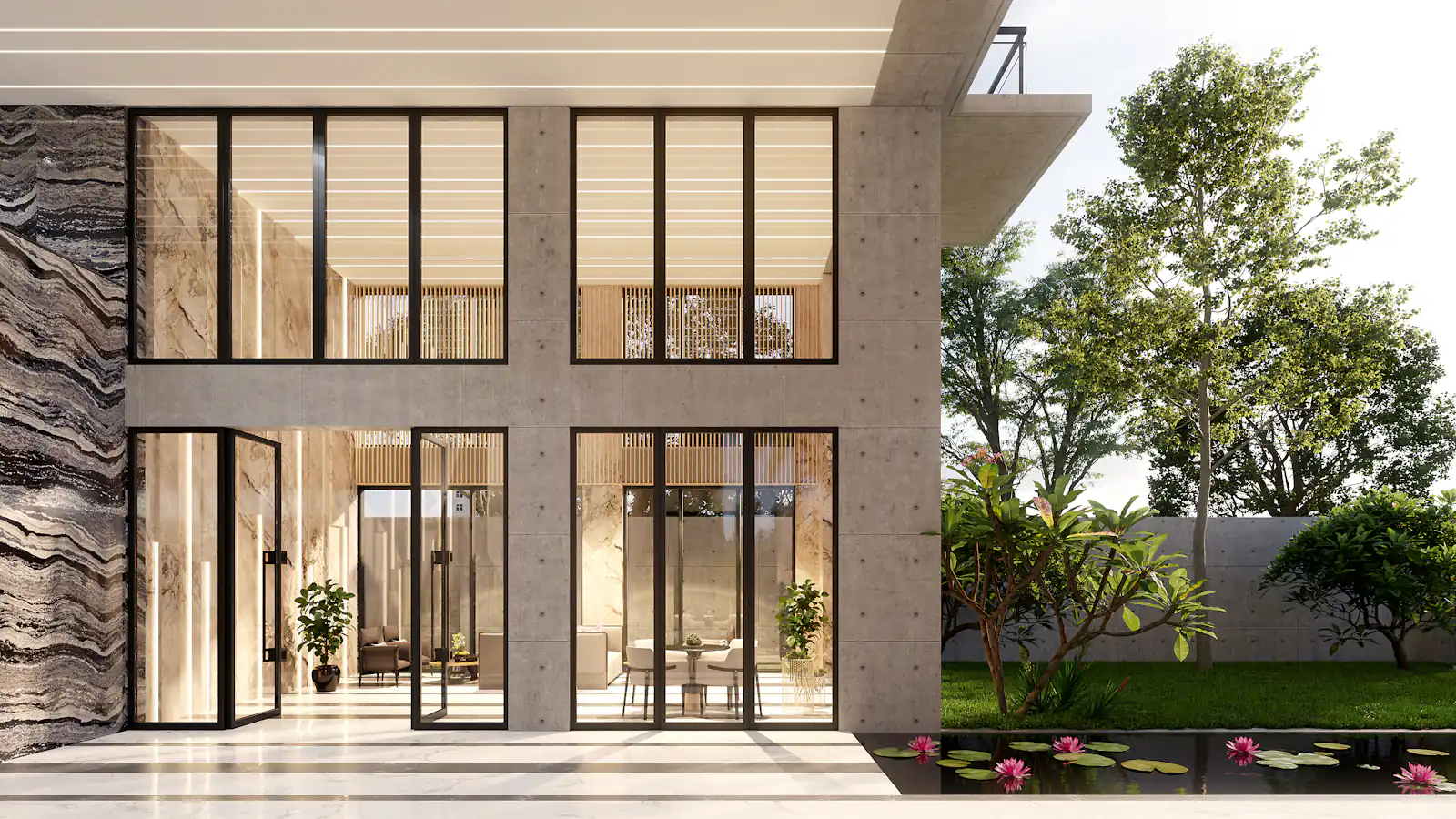
Aluminium windows have changed a great deal since the cold, draughty frames many people remember from the 1970s. Today's systems are insulated, tightly sealed and finished in tough powder-coated colours. Their real strength, though, is the frame itself. Aluminium is stiff enough to hold big panes of glass in very slim sections, so you see more of the view and less of the window.
We fit aluminium windows across Newcastle and the wider North East, on everything from new extensions in Ponteland to 1930s homes in Fenham that originally had steel frames. Here is what you need to know before choosing them.
Are aluminium windows warm enough for a Newcastle winter?
Yes, as long as they are a modern thermally broken system. Aluminium conducts heat very well, which is why the old single-skin frames felt icy and ran with condensation. A thermal break solves this by splitting the frame into an inner and an outer section joined by a strip of insulating polyamide. Heat cannot travel straight through the metal any more.
Combined with good double or triple glazing, thermally broken aluminium windows can meet the Part L requirement for replacement windows in England, which is a U-value of 1.4 W/m²K or a Window Energy Rating of band B or better. Some premium systems go well beyond that. Because the frames are slim, more of each window is glass, so the quality of the glazing has a big influence on the final figure.
Double or triple glazing in aluminium?
Aluminium frames are strong enough to carry the extra weight of triple glazing, which makes them a good partner for it on large or exposed windows. Our double vs triple glazing guide explains when the extra layer is worth paying for.
Which homes suit aluminium windows?
Aluminium looks its best where clean lines matter. It is a natural fit for contemporary new-builds, barn conversions, rear extensions and homes that have been remodelled inside with an open-plan layout. Floor-to-ceiling fixed panes, corner glazing and wide picture windows are all far easier in aluminium than in uPVC.
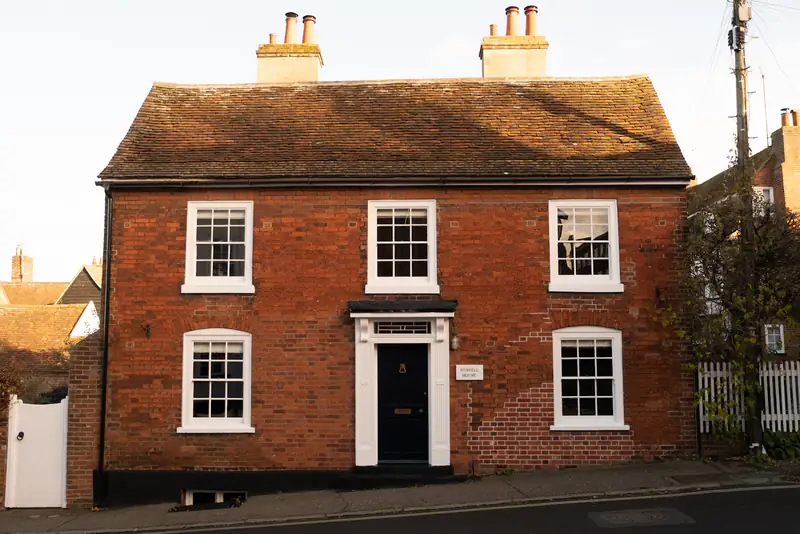
It can also work on older houses, but the detail needs thought. On a red-brick Edwardian terrace in Jesmond, a slim anthracite casement on the rear elevation can look superb, while the front might be better served by something more traditional. Many homeowners mix materials this way, using aluminium for the garden side and a period style facing the street.
Replacing original 1930s steel windows
Plenty of 1930s semis around Newcastle, Gateshead and North Tyneside were built with slender steel windows, often with horizontal glazing bars and curved suntrap bays. Many have since been replaced with chunky uPVC that rather spoils the look. Others are still hanging on, single glazed and rusting at the corners.
Heritage-style aluminium is the closest modern match. The profiles are narrow, the glazing bars can be slim and genuinely structural in appearance, and the windows can be finished in black, dark grey or traditional cream. You keep the character of the house and gain proper insulation.
Curved and bowed openings need careful surveying, and bays on these houses often need structural checks too. Our page on bay and bow windows covers that side of things in more depth.
Powder coating, colour and sea air
Aluminium windows are finished with a powder coating that is baked onto the metal. It is hard-wearing and does not need repainting. You can choose almost any RAL colour, in matt, satin or textured finishes, and dual-colour frames let you have one colour outside and another inside.
Homes on the coast at Tynemouth, Whitley Bay and South Shields face salt spray, which is hard on any building material. For these properties, ask about coatings and pre-treatments designed for coastal or marine environments, and about stainless steel fixings. Rinsing the frames with fresh water a few times a year, particularly after winter storms, helps the finish last.
Colour choice is worth seeing in daylight. A dark grey that looks crisp on a small sample can read almost black across a whole elevation. We bring colour samples to the survey so you can hold them against your brickwork.
Why aluminium costs more, and what drives the price
Aluminium windows usually cost more than uPVC. The raw material is more expensive, the thermal break adds manufacturing steps, and frames are often made to order in specific colours. What you get in return is a slimmer, stronger frame with a long life.
Within that, the price of your project depends on:
- the number and size of windows, and how many open rather than stay fixed;
- the glazing, from standard double to triple, or specialist glass such as acoustic or solar control;
- dual colours, special textures or heritage glazing bars;
- how easy the openings are to reach, especially above ground floor;
- any making good needed around old steel or timber frames.
We set all of this out line by line in a fixed, itemised quote. There is more background in our guide to what affects the cost of new windows.
Planning permission and aluminium frames
Replacing windows on a house is usually permitted development, as long as the new windows look broadly similar to the old ones. Things change in a conservation area with an Article 4 direction, where the council may control the material, colour and style of windows on certain elevations. Listed buildings need listed building consent for almost any change.
Heritage-style aluminium can sometimes be acceptable where steel windows were original, but this is entirely a decision for the planning authority. Check with Newcastle City Council, or with Gateshead, North Tyneside, South Tyneside or Northumberland depending on where you live. Our guide to replacing windows in a conservation area walks you through the questions to ask.
How aluminium compares with uPVC
If budget is the main concern, uPVC windows give excellent insulation for the money. Aluminium makes sense when you want slimmer sightlines, larger panes, a strong modern colour or a frame that will keep its shape for many years. Plenty of our customers ask us to price both, which is easy to do at a single survey. If you would like that comparison for your home, use the quote form on this page to get started.