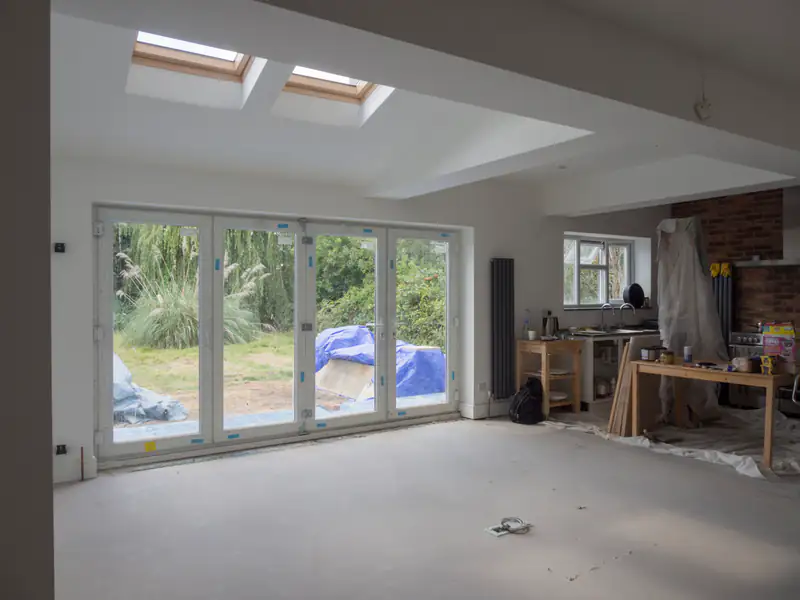
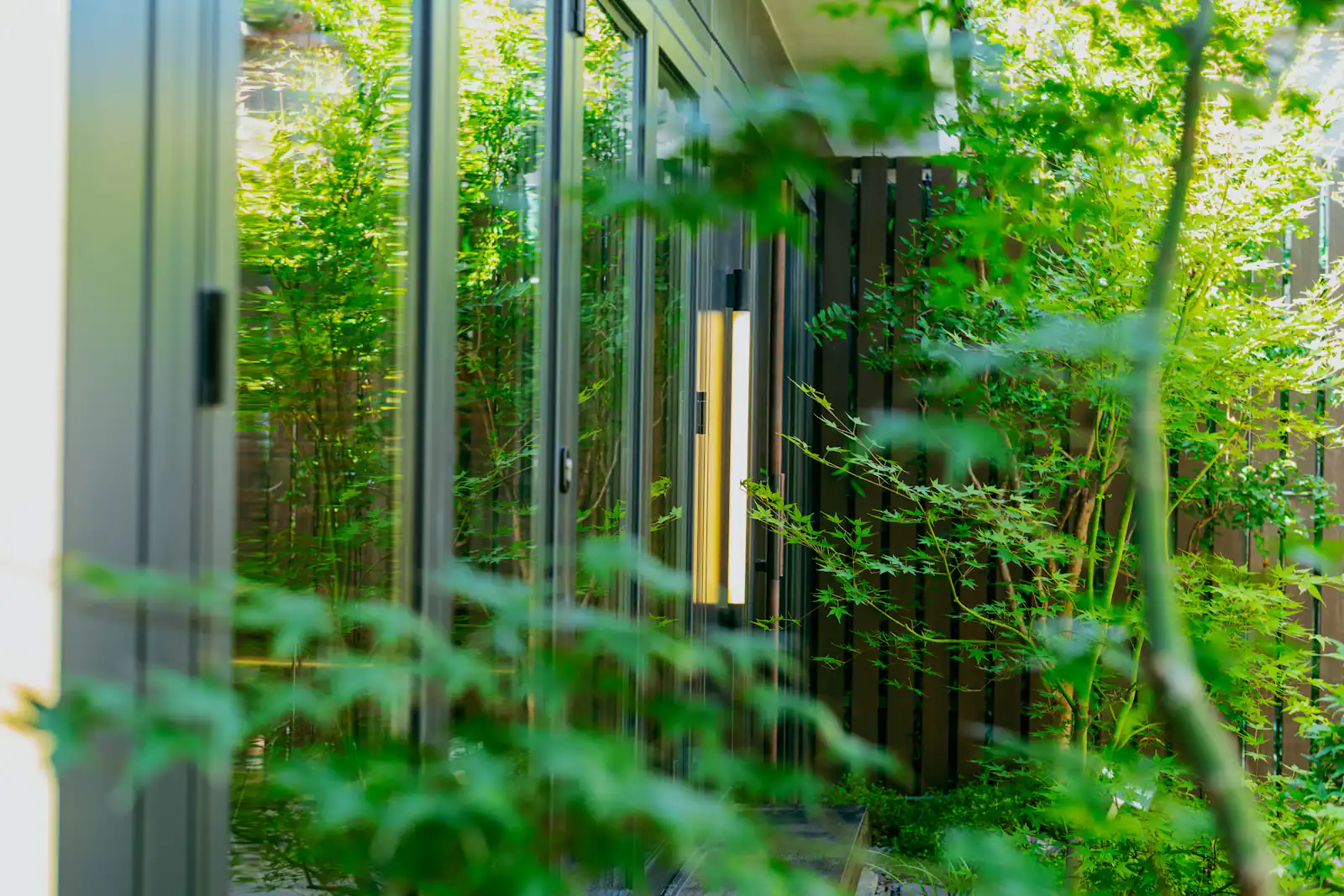
Sliding patio doors are the best choice when you want as much glass and as little frame as possible. The panels glide past one another on a track, so nothing swings into the room or out over the patio. That makes them ideal for lounges and kitchens where furniture sits close to the doors, and for gardens where space right outside is tight.
Plenty of homes around Newcastle still have sliding doors from the 1980s or 1990s that stick, rattle and let the cold in. Modern sliders are a very different product, and below we explain how they work, which material suits which opening, and how to keep a large expanse of glass secure and warm.
How sliding patio doors work
A sliding door is made up of two or more panels. Some are fixed and some slide. Each sliding panel runs on rollers along a track in the bottom of the frame and is guided at the top.
In-line sliders
Most sliding patio doors are in-line sliders. The opening panel moves to sit behind the fixed panel, and brush or rubber seals close the gap between them when shut. They are smooth to use and suit most homes.
Lift and slide systems
On a lift and slide door, turning the handle lifts the panel off its seals before it moves. When you lower it again, the weight of the panel presses it down into the seals. This makes very large, heavy panels easier to move and gives a tighter seal when closed, so it is often chosen for big openings.
Two, three and four panes
A two-pane slider has one fixed and one sliding panel. Three and four-pane layouts let you open the middle or both ends, which is useful in a wide opening where you want access from more than one point.
Aluminium or uPVC sliding doors?
Both materials make good sliding doors, but they suit different situations.
Aluminium is strong enough to carry very large panes in slim frames, so you get narrow interlocks where the panels meet and a much clearer view. It is the natural choice for big openings and modern extensions, and it can be powder coated in almost any colour. Thermally broken frames keep heat loss down.
uPVC sliders cost less and insulate well. The frames are wider, so you see a little more frame and a little less glass, and the maximum panel size is smaller. For a standard opening on a 1970s or 1980s house, uPVC is often perfectly adequate and matches existing uPVC windows well.
How big can a sliding door be?
The size you can achieve depends on the system, the material and the weight of the glass. Aluminium sliders can span very wide openings with only slim interlocks, while uPVC has lower limits on panel size.
The glass specification matters too. Triple glazing and thicker acoustic or laminated glass all add weight, which can affect how large each panel can be. We will confirm what is achievable for your opening once we have measured it.
If you are enlarging an opening to fit bigger doors, a new lintel or steel beam will be needed. That is structural work and needs Building Regulations approval. If your home is in a conservation area or is listed, check with your council before making changes to openings.
How secure are sliding patio doors?
Older sliders had a reputation for being easy to lift off their tracks. Modern doors are designed to stop that.
- Anti-lift blocks: fitted in the head of the frame so the sliding panel cannot be lifted out.
- Multi-point locking: hook bolts engage into the frame at several points along the edge of the panel.
- Anti-snap cylinders: the same high-security cylinders used on front doors.
- Laminated glass: holds together if broken, making it much harder to get through.
If you are worried about security on an older slider, upgrading the cylinder and checking the anti-lift devices is a sensible first step, and our repairs team can do that.
Keeping a large glass door warm and comfortable
A big sliding door can make up a large part of a room's outside wall, so its thermal performance matters. High-performance double glazing with Low-E coatings and warm-edge spacers will meet current Building Regulations. Triple glazing is an option on many systems if you want to reduce heat loss further.
On south and west-facing doors, the bigger problem in summer can be heat rather than cold. Solar-control glass reduces glare and overheating while still letting plenty of light through. On the coast at Tynemouth or South Shields, look for good seals and drainage to handle wind-driven rain.
Replacing old sliding doors
If your existing sliders are hard to open, the rollers are often worn or the track is damaged. Sometimes rollers can be replaced, but on older doors parts can be difficult to source and the frames may be past their best. Other signs it is time to replace include misted glass, draughts along the interlock, and locks that no longer catch properly.
When we replace sliding doors, we remove the old frame completely, dispose of it responsibly, and fit the new doors level and square so they glide properly. We provide a Building Regulations compliance certificate when the job is done.
Replacement is also a good moment to rethink the layout. An old two-pane slider might work better as a three-pane door with a wider opening in the middle, or you might decide that a set of French doors suits a smaller opening better. We are happy to sketch out the options at your survey.
Caring for the track and rollers
The track is the most important part to look after. Grit, leaves and pet hair collect in it and make the door harder to slide. A quick vacuum and wipe every few weeks keeps it running smoothly. Keep the drainage slots clear too, so rainwater can escape. Wipe the frames down occasionally, and more often near the sea, where salt builds up.
If you are deciding between a slider and another style, compare them with bi-fold doors, then book a free survey through the quote form when you are ready.