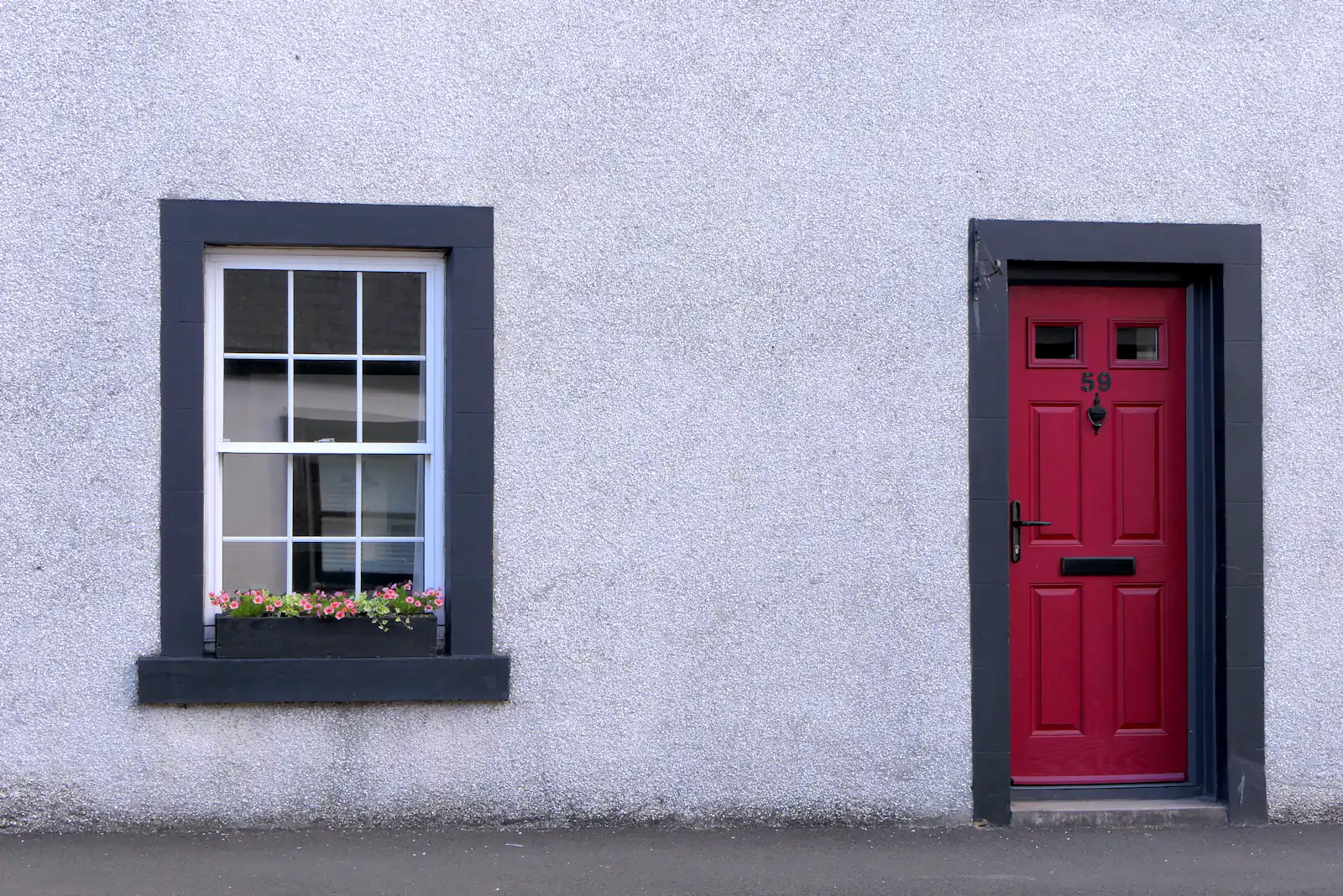
uPVC doors are the workhorses of most homes. They are fitted on back doors, side entrances, utility rooms and plenty of front doors too, and a good one will open, close and lock smoothly every day for years without asking for much in return. If your current door is draughty, hard to lock or still the original timber one that needs painting every other summer, a new uPVC door is one of the simplest upgrades you can make.
Below we explain what separates a good uPVC door from a poor one, which panel and glass options suit which entrance, and how to tell whether your existing door needs replacing or just a repair.
Where uPVC doors make the most sense
We often suggest uPVC for back and side doors, where you want strong security and good insulation but appearance is less of a priority. They also work well as front doors on modern homes, and on Tyneside flats where the upper and lower flat each have their own entrance next to one another and a matching pair keeps the frontage tidy.
For a statement front door on a Victorian terrace, a composite door usually looks more convincing because the slab is thicker and closer to real timber. Plenty of our customers choose a composite front door and a uPVC back door, matched in colour, which keeps costs sensible without compromising on security.
What makes a modern uPVC door secure?
Older uPVC doors from the 1990s and early 2000s gave the material a mixed reputation, mainly because of weak cylinders and thin frames. Today's doors are a different product.
Steel reinforcement
Good uPVC door frames and sashes have galvanised steel reinforcement running inside the profile. This stiffens the door, holds the hinge and lock screws firmly, and makes it much harder to lever open.
Locks and cylinders
A multi-point lock throws hooks or bolts into the frame at several points when you lift the handle. The cylinder, which is the part your key goes into, should be an anti-snap design. Upgrading the cylinder is one of the most cost-effective security improvements on any uPVC door, new or old.
Hinges and glazing
Heavy-duty adjustable hinges stop the door dropping over time, and internally beaded glass means a burglar cannot remove the glazing from outside.
Panel and glass choices
The panel is the infill in the middle of the door, and it changes how the door looks and how much light reaches your hallway or kitchen.
- Solid panels: best for privacy and security, and a good choice for a garage or side door.
- Half-glazed doors: a popular option for back doors, letting light into the kitchen while keeping the lower half solid.
- Fully glazed doors: give the most light and are often used to step out to a garden.
- Decorative and obscure glass: gives privacy on a front door while still brightening a dark hall.
Glass in and around doors sits in what Building Regulations call a critical location, so it has to be safety glass. Every glazed panel we fit uses toughened or laminated glass for that reason.
Low thresholds and easier access
A standard uPVC door has a raised threshold at the bottom, which helps keep rain out but can be awkward for wheelchairs, walking frames, pushchairs or anyone who finds steps difficult. A low threshold reduces that lip to a much smaller height.
Low thresholds need careful detailing on exposed walls, because the lower the threshold, the more the door relies on drainage and the slope of the ground outside to stay dry. On a back door facing the prevailing wind, we may suggest a canopy or a small drainage channel as well. We will look at your step, paving and exposure at the survey and recommend what will work.
How long does a uPVC door last?
A quality uPVC door should give many years of use. The frame and panel are very durable and do not rot or need painting. White uPVC can discolour slightly over a long period, particularly on cheaper profiles, while foiled colours and woodgrains hold up well with a little care.
The parts that wear out are the hinges, the lock gearbox, the cylinder and the rubber seals. These are all replaceable. If you keep the door adjusted and lubricate the lock once or twice a year, you will get the most from it.
Repair or replace your uPVC door?
We would always rather fix a door than replace one that still has life in it. A repair usually makes sense when:
- the door has dropped and catches on the frame, but the frame is sound;
- the lock is stiff or the key is hard to turn;
- a glass panel has misted or cracked;
- the seals are worn and letting in draughts.
Replacement is usually the better value when the frame is twisted or split, the door is from an older system where parts are hard to find, the locking is poor and cannot be upgraded, or you want a different style or better thermal performance. Our window and door repairs page covers the common faults in more detail.
Building Regulations for replacement doors
Replacing an external door is controlled work under the Building Regulations in England. The new door has to meet the thermal standards in Part L, and the glazing has to meet the safety glass rules. The installation must either be carried out by an installer registered with a Competent Person Scheme or be signed off by your local council's building control team.
Once your door is fitted, we provide a Building Regulations compliance certificate. Keep it safe, because a solicitor will usually ask for it when you sell the house.
If you are planning to change your windows at the same time, it is worth matching the colour and finish across the house. Our uPVC windows come in the same range of whites, colours and woodgrain foils. In a conservation area, check with the council before making changes to the front of the property.
When you are ready, use the quote form to book a free survey and we will measure up and talk you through the options.