
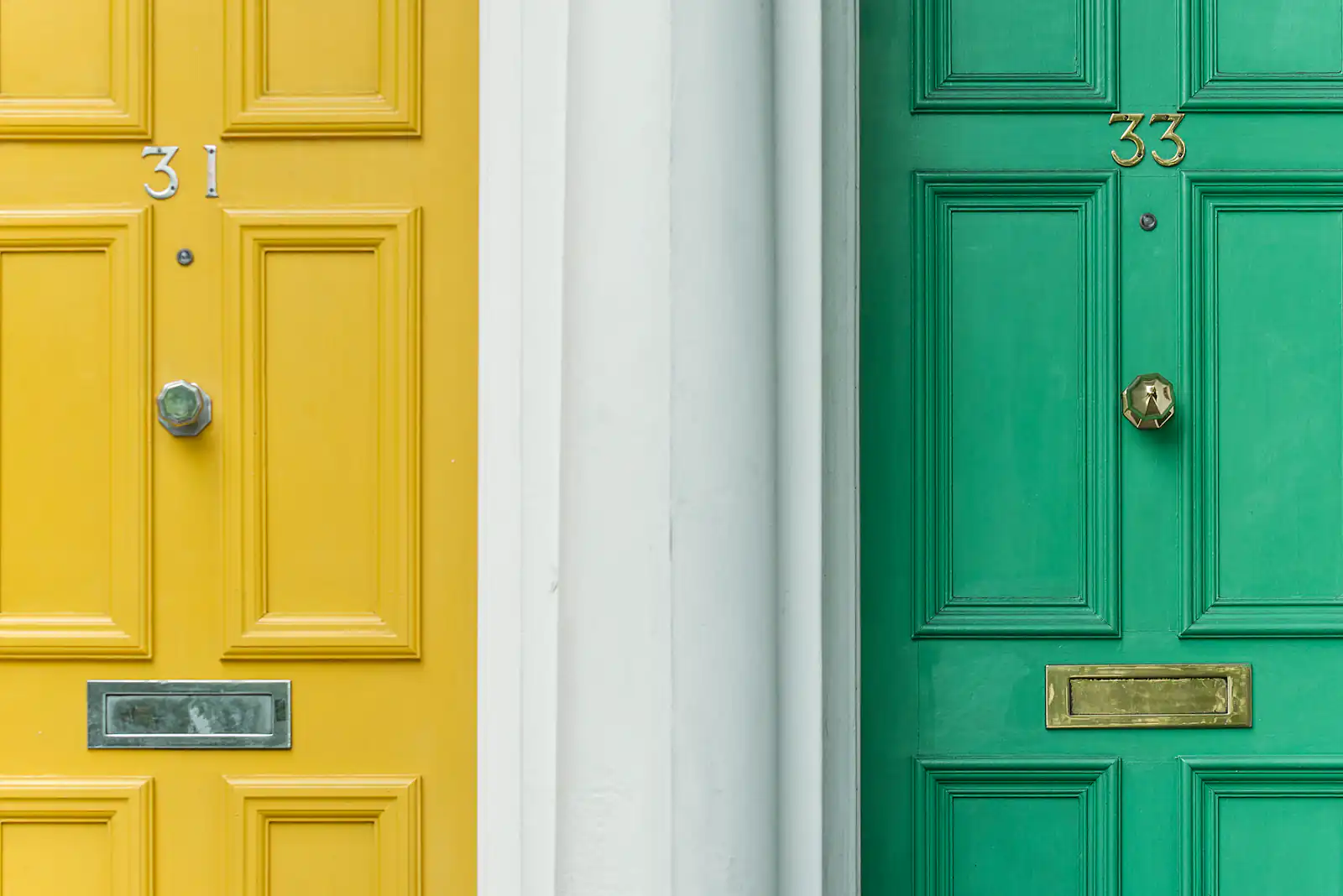
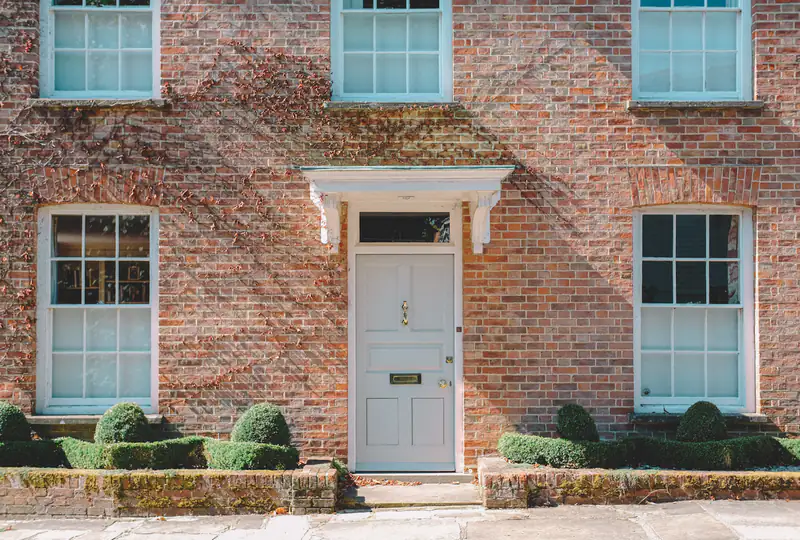
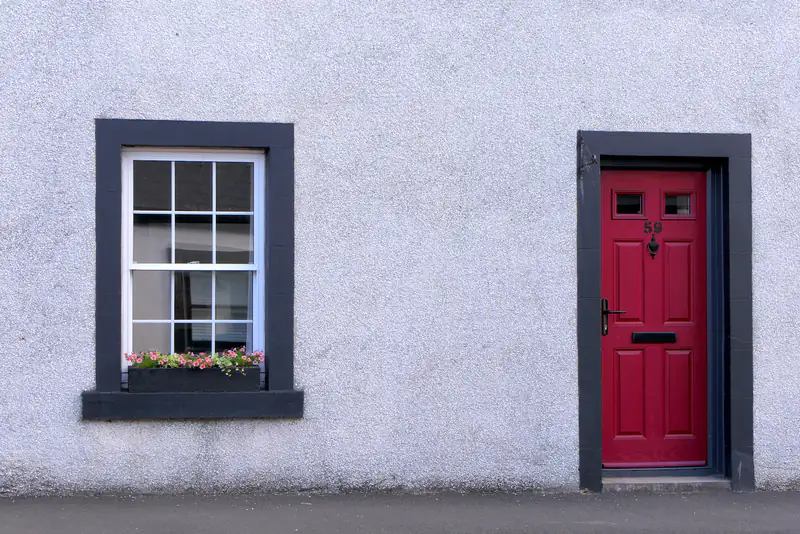
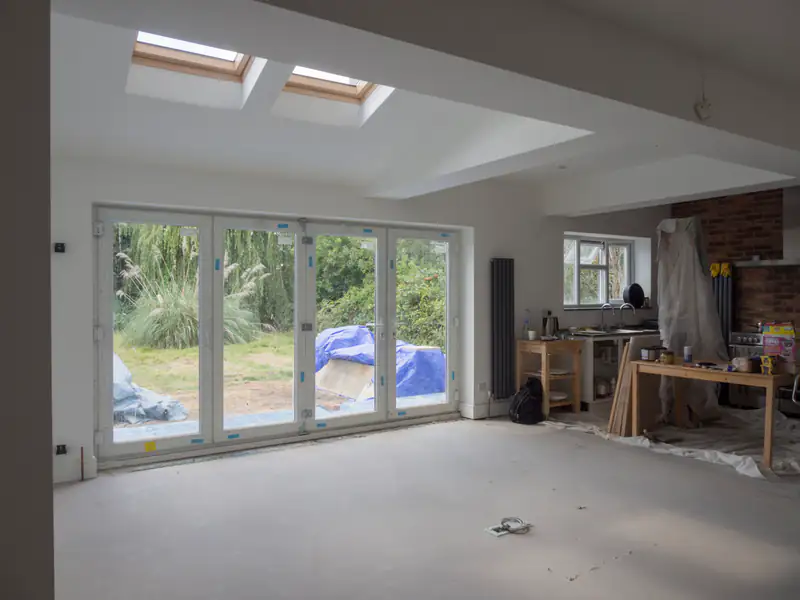
A new door does several jobs at once. It has to keep the weather out, stand up to forced entry, open and close smoothly for years and look right on your house. We fit front, back and garden doors across Newcastle upon Tyne, from composite front doors in Gosforth to wide bi-folds on extensions in Ponteland.
Below we explain how the main types of door compare, what to look for in security, and the practical details that are easy to overlook until the door is already on order.
Front and back doors: what are your options?
Most entrance doors we fit are either composite or uPVC. Both come with multi-point locking, insulated cores and a wide choice of styles, glazing and colours. The difference lies in how they are built and how they feel.
Composite doors
A composite door has a solid or foam-filled core, often with a timber or reinforced frame, and a tough glass-reinforced plastic skin. The result feels heavy and solid when you close it and has a realistic woodgrain texture. Composite is the most popular choice for front doors. You can see the range on our composite doors page.
uPVC doors
A uPVC door uses a uPVC frame with an insulated panel or glazing in the middle. It is lighter and usually costs less than composite. uPVC is a sensible choice for back and side doors, utility rooms and homes where budget matters most. The uPVC doors page covers styles and panel options.
Composite vs uPVC doors compared
Neither material is wrong. The right choice depends on where the door goes and what you want from it.
| Composite | uPVC | |
|---|---|---|
| Feel | Heavy and solid | Lighter |
| Appearance | Realistic timber-effect finish | Smooth or foiled finish |
| Cost | Higher | Lower |
| Typical use | Front doors | Back, side and utility doors |
| Maintenance | Very low | Very low |
Many households choose a composite door for the front and a matching uPVC door at the back. That keeps costs sensible without compromising on the door visitors see.
French, bi-fold or sliding patio doors?
Garden doors are about light and access as much as security. The three main types suit different openings and different ways of using a room.
French doors
French doors are a pair of hinged doors that open outwards or inwards. They suit smaller openings and period homes, and they replace a single back door or window without major building work. See our French doors page for styles.
Sliding patio doors
Sliding doors have large glass panels that glide past each other. They do not swing into the room or garden, which helps when space is tight, and their slim frames give a clear view when closed. Only part of the opening can be open at once.
Bi-fold doors
Bi-folds have several panels that fold and stack to one or both sides. They open almost the whole width, which is ideal for linking a kitchen extension to a patio in summer. When closed, there are more frames in the view than with sliding doors. Our bi-fold doors page explains configurations and traffic doors.
Wide garden doors are usually best in aluminium, which stays rigid over long spans with slim frames. uPVC versions are available for smaller openings.
How secure are new doors?
Door security is mostly about the lock, the cylinder and the frame working together. These are the features we look for.
- Multi-point locking. Hooks, rollers and bolts engage at several points along the height of the door when you lift the handle and lock it.
- Anti-snap cylinders. Standard euro cylinders can be snapped. Upgraded cylinders are designed to resist snapping, bumping, picking and drilling.
- Reinforced frames and hinges. A strong lock is only useful if the frame and hinge side cannot be forced.
- Laminated glass. Glazed panels in or beside the door can use laminated glass that holds together if broken.
PAS 24 is a recognised UK test for the security of doors and windows, and Secured by Design is a police-backed scheme that builds on it. We can supply composite doors and other designs tested to these standards where you want them. If you are not sure what level you need, we will explain the options without overselling.
Thresholds, access and practical details
Some of the details that matter most day to day are easy to forget when choosing a design.
- Thresholds. Low thresholds make access easier for prams, wheelchairs and anyone unsteady on their feet. On exposed sites, the threshold also needs to keep driving rain out, so the right choice depends on how sheltered the door is.
- Opening direction. Front doors usually open inwards. Garden doors can open in or out, which affects furniture layout and how the door copes with wind.
- Letterplates and spyholes. Draught-proof letterplates and security letterbox cages are worth considering on front doors.
- Glass privacy. Obscure and decorative glass let light into a hallway without letting people see in.
How long do new doors last on Tyneside?
A good composite or uPVC door should give many years of reliable service. Exposure is the biggest factor. Doors facing the sea in Tynemouth, Whitley Bay or South Shields, or facing into the prevailing wind, take more punishment than those on a sheltered street in Fenham.
A few simple habits help any door last longer:
- Clean the door and frame with mild soapy water, and rinse coastal doors more often to remove salt.
- Lubricate the multi-point lock and hinges once a year with a light oil.
- Have the door adjusted if it starts to drop or catch, rather than forcing it.
- Keep the drainage channels in the threshold clear.
Building Regulations and planning for doors
Replacement external doors must meet Building Regulations for thermal performance, and glazed doors need safety glass. As with windows, the work should be done by an installer registered with a Competent Person Scheme or signed off by building control. We provide the compliance certificate when we finish.
Changing a door on a house rarely needs planning permission. Conservation areas with Article 4 directions and listed buildings are the exceptions, and changes to the size of an opening may need extra checks. Always confirm with your council first. If you would like advice on any door, the quote form at the top of the page is the easiest place to start, and we will arrange a free survey.